
Ruru
If he’d ever been happier, Rodney was hard-pressed to think of when that day might’ve been. Was it when he first laid eyes on her? Or the day Val made him an honest man? That day, in the tiny chapel up on the cliff with the sea booming below, and the hard-case chaplain whose lips were stained with altar wine, came pretty close. He scratched his head, wiped sweat from his brow with a weathered blue handkerchief he kept in his trouser pocket. No, he thought. It was this afternoon, here, on the beach, with the sun drawing in and the wind picking up, and the sandhoppers tickling his feet.
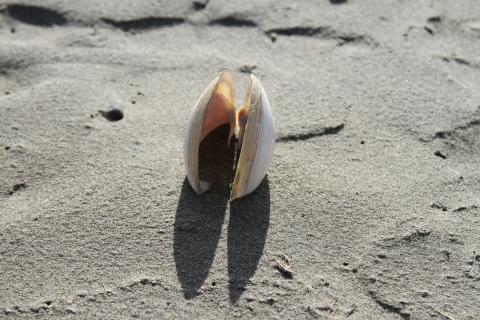
All afternoon they’d been there. Rodney shading himself from the blazing February heat with an old newspaper in which he’d marked off yesterday’s race results, while his Val waded in the shallows digging for pipis. She stood there, her trousers rolled up to her knees, her shirt sleeves up to her elbows, her hips wiggling from side to side so that her feet sank into the soft wet sand. She’d scrunch her toes, feeling for the sharp coarseness of shells underfoot, at which point she’d bend at the waist and plunge her arms beneath the water, caring not a jot whether her sleeves got wet.
With each find, she’d squeal with delight.
“Auē! See the size of that one?” she’d say, triumphantly holding the yellow-white shells up like tiny trophies for Rodney to see before tossing them in a tin bucket that floated beside her, tied to her wrist by a length of twine.
The last of the evening sun shone through the radiata pines on the dusty drive home over the hills. Inside the car, they joked and laughed. He’d caught the sun, his whalebone-white skin had the habit of doing that, and she liked giving him a hard time.
“Look how red you are! You’re like a blimmin’ crayfish!” she said howling with laughter.
He feigned offence. But like the other times he could never keep the act up for long. His scowl gave way to a smile.
“You’re as mad as a sack of ferrets,” he said and they laughed some more.
Val never burned. Even if she was mucking about in the sun all day. If anything, to Rodney’s eye—a fair few others’ too—it only made her more bronzed, more beautiful, as though she’d been carved from wood. And as for Val, she’d always thought that Rodney was a handsome rooster. What with his flash of red hair, and those legs thick as hams.
*
The sky had turned a twilight blue, pierced by a pinprick red of the evening star when they parked up beside Te Puka Tavern, their home for the past twenty years.
Back then, when they first took the tavern over, business was bad, what with so few men left kicking around. But the intervening years, since that hoolie in Europe had blown over and the men (or what was left of them) came home, had been kind. The freezing works had made slaughtermen of the locals, and a few other young jokers had moved to the region with the idea of giving shearing a crack.
Now, with Rodney pouring jugs and breaking up the odd punch-up, and Val taking care of dinners, they did a roaring trade.
Val handed the bucket to Rodney as they stepped from the car.
“I’ll give the flowers a drink. Let the dogs out for a bit.”
Rodney took the bucket inside, plugged the drain, and tipped the pipis into the kitchen sink to let them soak and purge any trapped sand. He took a large copper pot from beneath the counter and placed it on the stovetop. He added a ladle of water from the sink to the pot, then struck a match to light the cooker. Blue and yellow flames flicked from beneath the pot to tickle its sides. He blew a tuneless whistle as he went about this, an expression of the unbridled contentment he felt in every crack and crevice of his soul. Twenty years married and in all that time the love they had for each other, the physical passion they felt, was unchanged. They were happy, them two, with their dogs and their tavern. In the past, Rodney would’ve liked a child, someone to kick a ball around with, to raise into a man. They tried for a while but it never happened. Couldn’t be done. He was damn embarrassed when Doc Mayhew told him that. So much so, he even offered for Val to go find some other joker. But she had none of it.
“What do we need an ankle-biter for? Your hands are full enough with me.”
*
With a ragged tea towel he wiped a few drops of water from the bench. Then, as he’d seen Val do, he held each pipi to his eye to make sure she hadn’t picked any duds. Any that were open he tossed straight into the bin where they sank into a bed of carrot peelings and onion skins. He wiped his face with his hand and scrunched his nose. His fingers had taken on the scent of the sea. He rinsed them under the tap and dried them, first on the tea towel, then on his trouser legs.
Rodney was from about as far away from the coast as you could be, and never got the taste for seafood. He gave it a good crack, mind. Whatever Val brought home he’d try. Pipis, paua, green-lipped mussels, you name it. None of it stayed down. Worst were those spiky purple kina with their orange roe. Gee, those things stank the place to high heaven. Val loved all that stuff, all that kaimoana, but pipis were her favorite. Plentiful and easy to get. And boy he loved watching her eat them. His pleasure must’ve nearly matched hers when she had a feed of the stuff. With a heaving plate before her, Val became a child. She’d dance in her chair, throw her head back in delight with every mouthful, bounce her feet on the floor as if running on the spot, and clasp her hands tightly to her breast.
The very thought made him beam.
*
It was about then he heard the dogs howling. He ignored them at first. They were prone to yap and normally calmed down pretty quick. So when they didn’t, he made for the back door.
He walked down the steps into the back garden, and as he set foot on the concrete path he broke into a run. Through the blaze of pink and orange dahlias that bloomed as big as hats, he saw Val flat on the ground, her toes pointing straight up to the sky, one arm above her head, the other by her side. Their two dogs, working animals of no specific breed, barked and chased each other in circles, jumping over her and snatching their snouts at the water that streamed in an arc from the hose.
"Get out of it,” Rodney growled, aiming a kick in their vague direction.
He kinked the hose and crouched over Val who began to stir. Her eyes fluttered open. He brushed the hair from her face and helped her sit up.
“You alright, love? They trip you? I’ll string them by their tails.”
“Nah, they’re alright. It’s nothing, just the heat. Made me go a bit woozy.”
“Bit woozy?” he said. He placed the back of his hand on her forehead. Her skin was on the clammy side, and she’d lost something of her color.
“Help us up,” she said. She placed one hand down on the ground and reached the other toward him.
He took her arm by the elbow and pulled her onto her feet. The dogs chased each other through the shrubs. Rodney whistled them back to the kennel, which he fastened shut with a chain and padlock. Val straightened her clothes, pulled at the hems of her shirt.
“Better call the doc,” Rodney said. “Get you checked out.”
He hovered over her, making sure she was steady on her feet.
“Nah, it was just the heat. Nothing a good feed won’t cure.”
“Sunday night, but I’m sure he won’t mind.”
She shook her head. “Come. Get me inside. I’m starving.”
Rodney’s expression said he wasn’t sure. “You sure?” he said.
She ignored him and made for the house. As she walked, he brushed the dust and pebbles from her back, and when she reached the steps he insisted she hold the handrail.
*
That was the first time and looking back on things now, Rodney knew he should’ve stuck to his guns about calling Doc Mayhew that night. But Val was a stubborn old thing. She’d been that way since the Lord had measles. Once her mind was made up, no one, least of all Rodney, could ever change it. Normally it saw them right though, so who was he to argue? After all, it was her idea, as newlyweds, for them to buy the tavern, never taking no for an answer even when time after time they were knocked back by the jokers in town who held the purse strings. In the end, through sheer bloody will, she found a way. They scraped together what was needed and set about making the joint respectable.
But, man alive, she was stubborn. So, when the fainting episodes grew more frequent, she’d always cook up some tall tale. One day she’d have slipped on the rug. On another, she’d stood up too fast. One time he found her with a bruise on her head and a sticking plaster over her eye.
“Left the bleeding pantry open. Bashed my scone,” she said.
He knew that was all rubbish, but each time he mentioned a check-up, Val pretended she hadn’t heard.
*
Things came to a head the day Robert’s young fella Tom burst into the tavern panicked and panting.
“Mr Rodney! Come quick! Val’s fallen!”
It was late afternoon, and she’d gone down to post some letters before the final collection of the day. Rodney ran as fast as his feet could carry him, keeping up with young Tom the entire way.
*
Outside the post office, a crowd—large by Te Puka standards—had gathered. They fussed over Val who sat on the ground with her back against the wall.
“She keeled right over,” Robert told Rodney. “Hell of a thud. Went down like a sack of hammers.”
Rodney pushed past the onlookers to help Val onto a wooden chair that Robert, the postmaster, had fetched from inside. His wife, Dulcie, had brought a glass of water. Val took a little of it, far less than Rodney wanted her to, and when he was sure she wouldn’t drink more, he handed the glass back to Dulcie.
“Better get me home, eh?” Val said.
Despite her protests, Rodney took Robert up on his offer of a lift back to the tavern, and once he’d got her to lie down, he called for the doc.
*
Rodney waited in the hallway on a chair he’d bought up from the kitchen while the doctor, a tall gray-haired man with blazing blue eyes, checked Val over. A few times Rodney pressed his ear against the bedroom door but it seemed that not much was being said. So he sat there, looking at his feet, twiddling his thumbs.
Eventually, after what seemed like a long time, the doc came out. He pulled the door softly shut behind him and looked down as he walked towards Rodney, who stood up. He put his hand on Rodney’s shoulder and offered him a sympathetic look. There was nothing he could do.
If the doc said anything after that, well, Rodney couldn’t tell you.
*
He hung about in the hallway for a long time after the doc had let himself out. Night had just about fallen, and the house was dark save for the sliver of light that came through the gaps in the bedroom door. He heard Val cough, and after drawing two deep breaths that made his eyes water, he went in to see her.
She’d propped herself up with a pillow, and the blanket that she’d knitted a few years back, inky blue like the water in Tokomaru Bay, lay folded at the foot of the bed. Rodney pulled it up to cover her legs, then sat on the bed beside her. He lay his head in her lap, she stroked his hair. And then with his shoulders shaking, and big gulps of air, he cried. He cried in the way that hurts all the way down.
Val patted his back.
“Don’t be such a sook,” she said.
“What are we going to do?” he said after a long silence.
“Reckon we’ll just get on with it.”
*
At first they did just that. Not much else they could do, really. He kept pouring drinks, and she served up roast dinners. Once a week the doc swung by to see her. He’d take her temperature, tap her chest, and leave a little vial of something that seemed to shore her up a bit. But pretty soon she started getting so tired that work was a bit much, and the customers, who’d tried to pretend the fare was as good as always, couldn’t keep up the act.
“Would’ve had the missus cook If I wanted boot leather for tea,” Rodney heard a customer say one night. Gee he was wild.
He closed the kitchen that evening and swore it’d be for good.
*
Summer gave way to autumn and the sun barely grazed the top of the hills. Most days, there was little Val could do other than lie in bed and sleep. Each morning Rodney went downstairs to feed the dogs and work the tavern, and in the evening, having rung the bell, which he took to doing earlier and earlier, he’d come back up to sit at the end of the bed. He’d rub Val’s legs and feet, and wipe her brow with a wet flannel, just as she’d done for him all the times he’d ever felt crook.
*
It was the end of April, about the time Rodney started bringing in firewood each day, that the morepork first began showing up.
The first night he heard it, Rodney sat bolt upright in bed. He wasn’t superstitious. Never had been. But given the circumstance he couldn’t help feel like that damn owl wasn’t an omen of sorts. A few times over the years they’d heard that same haunting bird call—ruru, ruru— never for more than a night or two, and Val’d come over all wide-eyed and ashen-faced.
“Hear that?” she’d say. “Someone’s gonna get it.”
And Rodney’d tell her not to be so damn silly.
“Bush all around. It’s just come looking for tucker. Nothing to be spooked by.”
He’d say this even though, if truth be told, a part of him worried too.
So, on that frosty April night when that bird showed up, Rodney tried his best to ignore it. He put a pillow over his head, shut his eyes tight. Val slept soundly on her back beside him, unbothered, snoring like a dormouse.
But by the fourth night he’d had a guts-full.
He rose from bed and went downstairs. He took the long-handled axe he kept in the wood store, swore at the dogs who’d woken on account of his being outside, and stood in the garden, listening.
It was a cloudless night, the stars shone brightly, and with each exhale his blue breath rose thickly from inside him. It thinned as it floated away.
He listened for a long time, but aside from the occasional rustle of leaves, and the dogs scratching inside their kennel, he heard nothing. Stood there, practically stark bollock naked, holding the axe limply in his hands, he felt a sudden sense of embarrassment. Turning, he made his way back toward the house.
And just as soon as he’d leant the axe against it:
Ruru, ruru.
He looked around.
The bushy branches of the young Tawa tree that grew as straight as an arrow sprung up and down. He took the axe and strode toward it.
He raised the axe high above his head, and feeling a desperate anger deep inside, he brought it back down with all his force.
He chopped. By jove, he chopped. Each blow striking the skinny trunk with a dull thud and a shower of wine-red berries. He kept at it, his mind empty, raising the axe and swinging it back down. By the time the sky had turned blue and orange and pink, and he’d about run out of puff, the tree stood no more.
He swung the axe a final time, lodging it into the stump, then sat on the steps to catch his breath.
Nearby a rooster crowed. The dawn chorus, warbling birdsong led by saddlebacks and tui birds, began. A gray tomcat sauntered through the grass, stopping to sniff the leaves of the felled tree. Its tail flicked as if waving something away.
Normally, at this hour they’d be starting their day.
Val, despite being a night owl, was always up first. She’d come down to boil the kettle for the tea they’d take together sitting at the table. This was their routine, carved into their lives like the desire lines on the hills around them. So, when Rodney went inside and saw the kitchen table bereft of mugs, he felt a surprising shock. For the second time that year, and only the second time since he’d been old enough to shave, he cried.
*
Rodney awoke with a start. He’d gone back in for a couple of hour’s kip and the bed was empty beside him.
He sat up and with a rising panic, he called for Val.
She appeared in the doorway, backlit by the watery morning sun.
“Mōrena Rodney Rooster,” she said, a cup and saucer in hand. “Already had mine, thought you could use yours.”
She put the tea on the nightstand, rotating the cup so the handle pointed toward him. The teaspoon rattled against the porcelain.
“You should be in bed,” he said. He rubbed the sleep from his eyes with his knuckle as she wiped away his suggestion with a wave of her hand.
He began rising from bed, but Val placed a hand on his shoulder. She fluffed the pillows to prop him up.
“Don’t know about you, but I slept like a baby.”
She danced a little jig when she said this, and he had to admit she looked pretty good. She kissed his forehead.
“Right,” she said. “Them spuds won’t peel themselves.”
She made for the door. But as she reached the threshold, she stopped. And Rodney, looking up from his cuppa from which he blew away steam, saw her reach for the door frame, miss, and collapse.
He leapt from bed. His cup fell to the floor. A puddle of tea soaked into the carpet.
*
It rained the morning Val passed. There wasn’t a scene, and Rodney was right beside her when it happened. He hadn’t slept much those last few days, owing to the growing sense of inevitability. What’s more he wanted to be there when the time came. He didn’t want her scared. So, he lay there each night, sleeping like a cat, listening to each fragile breath right up until her last. To him, it sounded like a sigh. Or maybe that sound came from him. Then the room fell silent in a way he’d never known.
He pulled the blanket over her feet—she always complained that they were cold—and walked to the telephone to dial the number he kept in a little black notebook beside it.
“Hello. Yes. Just now. Right-o. Thank you.”
He replaced the receiver, opened the front door, and sat on the porch to wait.
The air felt heavy. It smelled of pine and the sea. Raindrops, the kind that kicks up dust when hitting the ground, fell pellet-like against his bare feet and thighs.
He didn’t bother moving.
*
Up on the hill where they’d married, under brilliant sunshine, it blew a gale. The men pulled their collars up and drew their chins into their chests, the women wrapped scarves around their heads to stop the cold stinging their ears. They stood side by side, heads bowed and wordless, as Val’s casket—hand carved from rimu wood the colour of golden syrup—was lowered into the earth.
Father Galivan, reading from a small leather-bound bible whose pages were yellowed and flaking, said the appropriate words. Something about how although Val was now absent in the body she was present with the Lord.
Rodney threw a handful of earth over the casket. Someone began singing—a mournful tune lost in the wind.
*
At the wake, though it was the last thing he wanted to do, Rodney opened the tavern for a few hours to host. He poured jugs for the townsfolk who sat together at small wooden tables sipping beer, reminiscing about the Val they knew. The best damn cook in the whole region, they said. A hard-case sheila who never suffered fools. A credit to her kind. If only they were all like her.
George, somehow already pissed despite the hour, appeared at the tavern. About five foot six by Rodney’s reckoning, George was dressed in a crumpled black suit—a change from his usual musty moth-eaten brown one. His hair, a mess of matted black curls, was dusted with ashy flakes of dandruff. On his head he wore a loosely-tied wreath of green heart-shaped leaves from a kawakawa tree. He carried with him a small clay bowl.
He placed it on the bar and held his right hand out to Rodney.
Despite some rheumatism that made the joints of his fingers look like knotted wood, and a tremor, which he often hid in his trouser pocket, his handshake was firm.
Though he was a nuisance, Val had always liked George. Her cousin in that sort of way that people who grew up together are, she said he’d not been the same since he’d come back. None of those boys were. She kept an eye out for him, as he had for her, and made sure he always left the tavern with some kai in his belly.
Rodney poured George a beer.
“Much obliged,” George said.
He drank it in a single draught, then put the empty on the bar and wiped the foam away from his top lip with his sleeve. He looked at Rodney, hopeful that another was forthcoming. The glass remained empty.
George shrugged his shoulders, then gestured toward the bowl.
“Know what that is?” he said.
Rodney shook his head no.
“Wai tapu. Holy water. For tramping the house. May I?”
Though Rodney didn’t know exactly what that meant, he nodded, then watched as George, unsteady on his feet, dipped his fingers in the clay bowl and flicked water around the room, mouthing the words of a quiet karakia—ake, ake, ake. Amine.
*
In those grieving days that followed, long dark days that turned to weeks then months, Rodney slept little. He kept the tavern shut, the curtains drawn, and only opened the door to bring in the meals that folks had left on the front step, or to toss scraps to the dogs when their whining became too loud to ignore.
Talk on the bush telegraph was that the tavern would never reopen—the men had begun frequenting a place a town over—and rumor was that the suits from the big smoke would soon be sniffing around looking to foreclose.
Frankly, had Rodney known any of this, he wouldn’t have cared. So hopeless it all seemed to him, he was of half a mind to take to the whole joint with a match and gasoline, and burn it down with himself still inside.
But he wasn’t one to make a scene. On the day he decided he’d had enough, he fed the dogs, made sure all the doors and windows were shut tight, turned on the cooker, blew out the flame, and went to bed.
*
Having let sleep take him, Rodney found himself sitting cross-legged in a field of long grass. The sky was bright blue with white clouds that came apart like stretched cotton. The sunshine was blinding. He squinted and raised his hands to shade his eyes. In the distance he heard the steady rhythm, the boom and hiss, of breaking waves. He turned his head toward the sound, and when he turned it back, Val stood before him. She looked as she always had. Beautiful, her hair was fixed the same as on their wedding day, tied in a neat bun, fastened with a large white feather. Her color was back, her eyes sparkled. The only difference was that draped over her shoulders she wore a cloak of woven brown and white feathers, a korowai, the type which he’d seen in the creased and crumbling black and white photos of whānau that Val had shown him. They looked at each other a long while, neither moving nor speaking, until smiling, Val leant in and whispered in his ear.
*
The sound of something hard hitting the floor startled him awake. It took a moment to remember where he was. He lay listening, half trying to recall what Val had said, half trying to figure what the noise was. Wind whistled through the gaps in the window jambs, rain tapped against the pane. The headlights of a passing milk tanker slid across the room, the sound of its engine puttered by. It was morning and the light came in blue.
He was thirsty. His head hurt. He remembered what he’d done and felt shame knowing what Val would’ve thought of his folly.
He opened the window, and went downstairs to pour a glass of water.
*
The water was cold with a faint taste of rust. He drank it quickly and poured another. He looked around the kitchen. The back door was wide open, fixed to its latch so it wouldn’t blow shut. A chair had been knocked over, and there were two empty beer bottles beside the sink. The gas was switched off, and on the table, filled with pipis, was George’s clay bowl.
Rodney poked his head outside. The rain had stopped, the dogs were stirring. His stomach felt empty. Hunger twisted his insides, like a rag being wrung out. He shut the door, put the glass beside the sink, then lit the cooker to heat water in a copper pan.
While the pot boiled, he checked the shells for duds.
He took them and sat on the steps out back. Val’s garden looked different now. No longer fever-bright like in the lustiness of summer, it had gone to seed over winter. Weeds had taken root where none ever were, and the leaves from the fallen tawa tree had browned and curled over. And though Rodney couldn’t see them, amidst the overgrowth, tender green shoots of spring poked out from the ground and began to unfurl.
He breathed in. The air smelled sweet and fresh.
Steam rose from the pipis. Rodney tilted his head to watch it drift skyward. As he did, he heard a rush of air, and like a plume of smoke rolling overhead, a morepork flew and landed on the ground a few yards away. Its feathers were gray and brown, and it had tufts of white around its ears. Its beak curved like the nib of a fountain pen. It stood with a furrowed brow looking him square in his eyes.
He tried to shoo it off. But it stood fast, bobbing and weaving its head like a boxer, blinking one yellow eye at a time.
He pulled apart a shell and tossed it. It skimmed across the ground, end over end, gathering dirt. The owl darted towards it, and with two pecks of its tiny black beak, sent the pipi down its gullet. It puffed its chest, shook as if drying itself off, and made a noise that sounded like laughter.
“You like that?” he said.
The morepork blinked and bobbed its head.
He tossed another, and this time when it swallowed, it hopped as if dancing on the spot.
He placed another in his left palm, and held it toward the bird.
It skipped towards his outstretched hand, and after a moment’s hesitation, snatched the pipi and jumped back. They looked at one another, each with a tilted head. The scent of a tomcat made the dogs bark, and the morepork spread itself wide. Then, with a snap of its wings it was gone.
*
Alone again, Rodney remembered his own hunger. He took another pipi and pulled it apart. As he had seen Val do a thousand times, he held it to his mouth and slurped.
He closed his eyes and began chewing. And as he felt the briny meat against his tongue, he couldn’t believe how good it tasted. As sweet and rich as all the years he’d shared with Val. With his eyes still closed he clutched his hands to his chest and raised his head up to the sky.
A gust of wind rustled the leaves of the trees. The tittering of riflemen and tomtits began.
Out front, George shuffled along the road singing softly to himself.
Rodney finished what was left of the pipis. Then, remembering what Val had whispered, he went inside and got on with opening the tavern.
Photo by Carolyn Wightman: https://www.pexels.com/photo/seashell-on-sandy-beach-in-sunlight-304396…